Going into 2026 Update
As organizations move into 2026, regulatory velocity is accelerating across AI, finance, healthcare, and infrastructure. This update outlines what decision-makers need to prepare for: faster rule changes, higher evidence standards, and a growing gap between policy intent and execution.
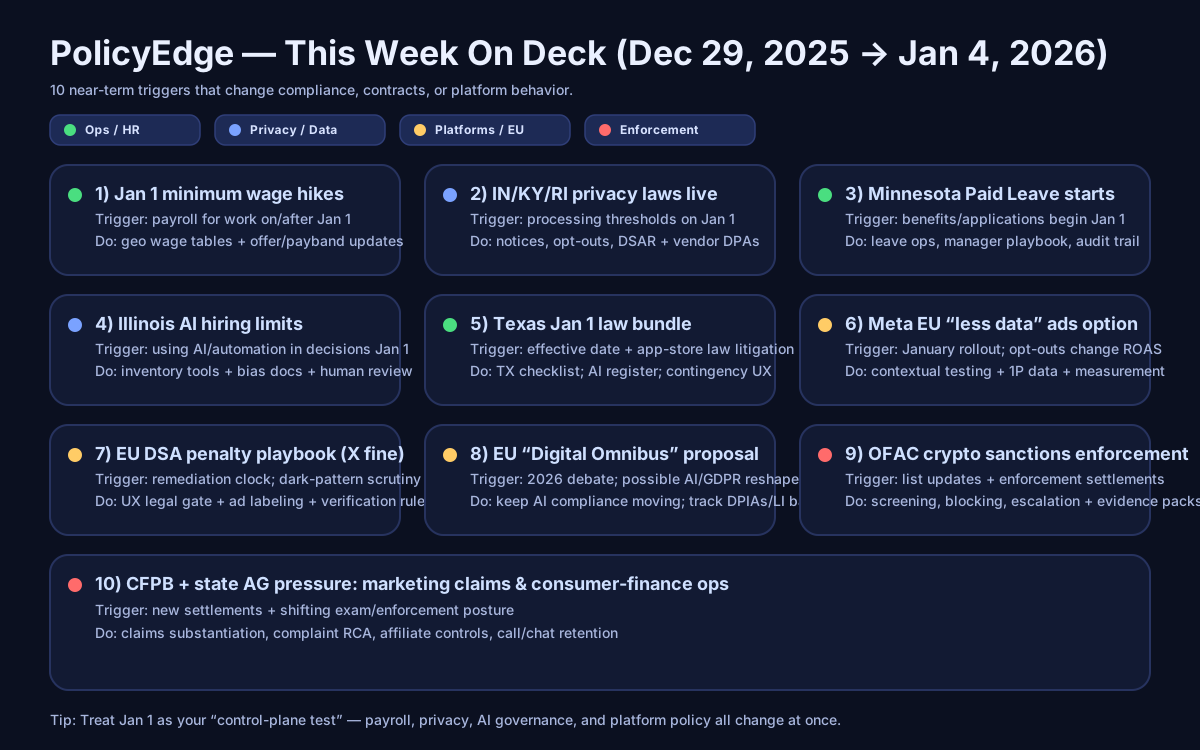
Top 10 Things on Deck This Week (Why Jan 1 Is Doing All the Damage)
1) Jan 1 Minimum Wage Increases (States + Cities)
What’s happening: New wage floors and tipped-wage changes activate automatically.
Pros
- Reduces wage-and-hour lawsuit exposure if handled correctly
- Improves retention in frontline roles
Cons
- Immediate cost increase
- Wage compression forces unplanned raises
Trigger
- Payroll covering work performed on or after Jan 1
How companies keep up
- Maintain a location-based wage matrix
- Reissue offer letters and update payroll logic
- Run a compression analysis before first payroll
2) New State Privacy Laws Go Live (Indiana, Kentucky, Rhode Island)
What’s happening: New consumer data rights, opt-outs, and vendor obligations activate.
Pros
- Forces cleaner data inventories
- Better vendor accountability
Cons
- More consumer requests and compliance overhead
- Patchwork complexity keeps growing
Trigger
- Processing resident data above statutory thresholds on Jan 1
How companies keep up
- Update privacy notices and opt-out flows
- Centralize DSAR intake and tracking
- Refresh vendor data-processing agreements
3) Minnesota Paid Leave Program Starts
What’s happening: Employees can begin using the state paid leave system.
Pros
- Predictable statewide standard
- Employee trust and retention boost
Cons
- New admin workflows and manager risk
- High retaliation / interference exposure if mishandled
Trigger
- Leave requests submitted starting Jan 1
How companies keep up
- Update leave policies and manager training
- Coordinate with payroll and leave vendors
- Document every leave decision
4) Illinois Restricts AI Use in Hiring
What’s happening: Limits on discriminatory AI hiring tools and disclosure requirements.
Pros
- Encourages defensible, explainable hiring practices
- Reduces reputational AI risk
Cons
- Slows automated hiring pipelines
- Vendor claims may not match legal reality
Trigger
- Use of AI or automated screening tools after Jan 1
How companies keep up
- Inventory all hiring technology
- Require bias audits and documentation from vendors
- Add human review checkpoints
5) Texas Jan 1 Law Bundle (AI, Insurance, Property, Digital Rules)
What’s happening: Multiple operational laws activate simultaneously.
Pros
- More clarity in AI governance expectations
- Some tax and insurance transparency benefits
Cons
- Texas-specific compliance carveouts
- Litigation uncertainty around digital rules
Trigger
- Jan 1 effective dates + court activity
How companies keep up
- Build a Texas-specific compliance checklist
- Maintain an internal AI use-case register
- Prepare contingency product flows
6) Meta Changes Ad Targeting in the EU
What’s happening: Users can opt into reduced data sharing, weakening hyper-targeted ads.
Pros
- Less regulatory exposure
- Pushes better creative and first-party data strategies
Cons
- Lower ad efficiency
- Attribution uncertainty
Trigger
- User opt-outs starting January
How companies keep up
- Shift spend toward contextual targeting
- Strengthen first-party data pipelines
- Rebuild measurement assumptions
7) EU DSA Enforcement Becomes Real (Design Is Now Regulated)
What’s happening: Platforms are fined over UX, verification labels, and user deception.
Pros
- Clarifies what regulators consider “dark patterns”
- Rewards transparent product design
Cons
- Growth experiments now carry legal risk
- Product, legal, and design must coordinate tightly
Trigger
- Enforcement decisions + remediation deadlines
How companies keep up
- Audit verification badges, upsells, defaults
- Create a trust-and-safety product review gate
- Preserve UX decision evidence
8) EU Signals Possible Delay or Rewrite of AI Obligations
What’s happening: Proposed changes may delay or reshape AI compliance timelines.
Pros
- More runway for governance and documentation
- Reduced short-term implementation pressure
Cons
- Strategic uncertainty
- Risk of stopping compliance work too early
Trigger
- Legislative debate moving into 2026
How companies keep up
- Continue AI compliance regardless of delay
- Classify AI systems by risk level
- Update DPIAs and training data reviews quarterly
9) Sanctions Enforcement Still Hitting Crypto and Tech
What’s happening: Enforcement actions reinforce expectations for screening and controls.
Pros
- Justifies investment in compliance tooling
- Reduces catastrophic enforcement risk
Cons
- False positives and user friction
- Engineering and ops burden
Trigger
- Sanctions list updates and enforcement actions
How companies keep up
- Automate screening and blocking
- Create rapid escalation procedures
- Log every sanctions decision
10) Consumer Finance Scrutiny Continues (Marketing + Lead Gen Risk)
What’s happening: Regulators remain focused on deceptive claims and affiliate behavior.
Pros
- Cleaner market for compliant operators
- Stronger disclosure norms
Cons
- Enforcement posture shifts quickly
- Multi-agency risk (federal + state)
Trigger
- New settlements, investigations, and exams
How companies keep up
- Audit all marketing claims
- Monitor affiliates aggressively
- Strengthen complaint response workflows